Showing posts with label Perennials. Show all posts

Saturday, February 11, 2023

It's time for Late Winter PRUNING


The ice has melted in North Texas, so let's sharpen those pruners and get busy in our gardens!   It's pruning time...

Click 👉 here for my Late Winter Pruning newsletter 

for tips to get your garden ready for spring growth!


Happy pruning!!!

Toni :-) 


Note:  If you have any questions, please post them on my Facebook or Instagram page.   I have disabled comments on my blog because of issues in the past.

Friday, December 30, 2022

Freeze December 2022


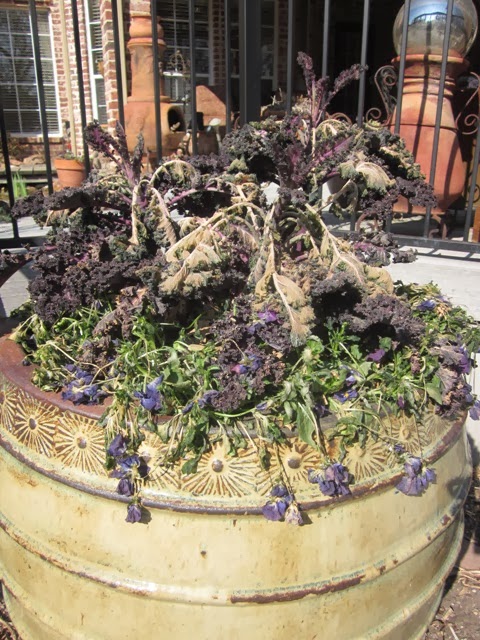
About a week after tornadoes touched down in Grapevine, TX, in December 2022, the first day of winter ushered in an arctic blast, and North Texas experienced a few days of freezing temps.   Our once lush, colorful gardens were reduced to either brown, crispy sticks or piles of mush.   

Back in 2017 I published a post about that year's freeze and how to determine if your plants are dead or dormant after the freeze.   

Click here to read my updated post: 


Tuesday, January 18, 2022

Late Winter PRUNING 2022


Late January through the end of February is THE time for pruning most shrubs, trees, perennials, and ornamental grasses in North Central Texas, Zone 8.   

For how-to tips to tackle all your landscape pruning to get ready for spring growth, check out my late winter pruning newsletter... 

 click here 👉-- LATE WINTER PRUNING Newsletter  

Happy pruning!

Toni :-)

Follow me on Facebook and Instagram @tonisignaturegardens

Thursday, September 9, 2021

Fall Newsletter 2021


It felt a little fall-ish this morning, and the arrival of the oxblood lilies (Rhodophiala bifida) tells me that it's not just wishful thinking playing tricks on my mind.   

Fall is a great time to get back in our gardens and tackle the projects we've been avoiding because of the summer heat.     

Here's my latest Fall Newsletter to help you get started.


Happy gardening...

Toni 

Friday, January 22, 2021

Late Winter Pruning

 LATE WINTER PRUNING 2021


Late January through the end of February is THE time for pruning most shrubs, trees, perennials, and ornamental grasses in North Texas, Zone 8.   

Here's my latest -- click here 👉-- LATE WINTER PRUNING Newsletter  with how-to tips to tackle all your garden pruning to get ready for spring growth.  

Happy pruning!

Toni :-)

Follow me on Facebook and Instrgram @tonisignaturegardens

Friday, February 1, 2019

Late Winter "Diggin' in the Dirt" Newsletter

'Molly's White' Frostkiss Hellebore

It is time once again for late winter pruning in North Central Texas. 

See my "Diggin' in the Dirt" Newsletter for tips to tidy up your garden and get ready for spring!

Happy pruning...

Toni :-)

Sunday, September 30, 2018

Blooms & Beyond: Year-Round Color for Your Garden


Wondering how to have year-round color in your garden?   I recently gave a presentation to the Grapevine Garden Club on this topic and the video was posted to YouTube.   Click HERE to check it out!

The plants mentioned in this talk are geared toward the Dallas/Fort Worth area in hardiness Zone 7/8, but if you live in other parts of the country, maybe it will inspire you to think through the seasons and how you can add color to your garden with plants that are hardy in your area.    Click HERE to see the plant list.

Below I've listed the garden centers and resources I mentioned in the presentation.

Here's to hoping you have something colorful in your garden all year long!

Toni :-)

Grapevine Garden Club
grapevinegardenclub.com

Stegall's Nursery & Plant Farm
stegallsnursery.com

Metro Maples
metromaples.com

Neil Sperry
neilsperry.com

aggie-horticulture.tamu.edu

TCMGA
tarrantmg.org

Fort Worth Botanic Gardens
fwbg.org


Tuesday, December 12, 2017

After a Freeze: Is it Dead or is it Dormant?


Tropical Giant Spider Lily - pile of mush
Turk's Cap - crispy sticks

Hard freezes in North Texas can render our once lush, colorful gardens to either brown, crispy sticks or piles of mush.   

For those new to gardening you might be thinking your treasured plants are dead.  But are they?    Let me run through a list of common plants in our area and help you discover...is it dead or is it dormant?    And if it's the latter, see instructions below on how to handle your plants to help them return to their pre-freeze glory next spring.


DEAD:

Plants that are only hardy to Zone 10 and above are considered annual plants/flowers in our Zone 7b/8a area. Annual summer flowers, such as Pentas, Periwinkles, Zinnias, Coleus, Caladiums, and Sweet Potato Vine will not survive freezes.  They can be removed now and replaced with cool season annuals like pansies and kale.

If you have a Zone 8b/9 plant, it is considered marginally hardy, and may or may not have been killed by the freeze.   For instance, some websites classify Esperanza Tecoma stans (Yellow Bells) as a Zone 9 plant.  Planted in the ground in a protected spot with a covering of mulch, it may well survive the freeze.    If planted in a container, plants lose one zone of protection from freezes, so it may not survive a freeze.   Mexican Milkweed Asclepias curassavica is another one of those marginally hardy plants.   It may come back from the root, or it may not.   It will usually reseed in our area, though, if it does not come back from the root. 

Look at your plant tag (or Google) to determine a particular plant's hardiness zone, and if it's a marginally hardy plant that has been damaged by the freeze, in late winter (late February), try cutting it back and then waiting for spring to see if it is going to return from the root. 


DORMANT:

Next we'll look at hardy perennials that were sent into dormancy with the freeze.    Their tops might look dead, but their roots are still very much alive and they will flourish again next season.   Here's a list of our most commonly used perennials and how to deal with their post-freeze state:

Any perennials that have turned to mush can be cut right after a freeze:

Daylily
Purple Heart
Garlic Chives
Canna 

Elephant Ear
Tropical Giant Spider Lily
Bear's Breeches
Ligularia/Farfugium (Leopard Plant)


The following perennials can be pruned to the ground after a freeze, but if they have any wildlife benefit (for instance, seed heads), consider waiting until late winter/early spring to cut:

Purple Coneflower
Black-Eyed Susan
Shasta and Ox-eye Daisy
Summer Phlox
Salvia leucantha (Mexican Bush Sage)
Mexican Mint Marigold
Chrysanthemum
Salvia farinacea (mealycup sage)
Salvia guaranitica (Black & Blue Salvia)
Russian Sage
Lantana
Zexmenia
Loosestrife
Flame Acanthus
Catmint
Bee Balm
Hardy Hibiscus
Turk's Cap
Datura
Dwarf Mexican Petunia (Katie's Ruellia) - after a freeze, on a dry day, just stomp on them and break the stems off at the ground and remove browned foliage.


Some perennials also add winter texture and interest, so save pruning for later:       

Salvia Greggii – Give it a slight haircut now to tidy up if desired, but save heavy pruning for February.   In mid-February cut it down to about 6 inches tall and wide.

Aster oblongifolius (Fall Aster) – You can cut it to the ground now; or leave for now for winter texture and interest - then cut to ground in February.

Ornamental grasses - After a hard freeze, the grasses will turn tan, but wait to prune in February.

Butterfly Bush, American Beautyberry:   Leave for now, but cut down to about 18 inches in February

Roses - Prune in February.  Be sure to REMOVE completely if infected with Rose Rosette Disease.


Some perennials are evergreen and may need no pruning after freezes:

Blackfoot Daisy, Calylophus, Pink Skullcap, Dianthus, 4-nerve Daisy, Creeping Phlox - Evergreen.   If no damage, no need to prune.   If any freeze damage, cut any damaged foliage in February.

Lamb's Ear:    Cut or pull away any browned leaves.

Columbine - They will be evergreen through the winter and will bloom in the spring.

Powis Castle Artemisia - Evergreen, but benefits from late winter pruning for fresh new growth.    Wait until February to cut back to about 6 inches tall

Liriope - Evergreen, but again benefits from late winter pruning for fresh new growth.    Wait until February to cut them to the ground (must be cut before March when spring growth starts).

Carex:   Some years they need no pruning at all, but any damaged foliage can be trimmed in late winter/early spring before new growth.  

Hardy Evergreen Herbs (Thyme, Oregano, Winter Savory, Salad Burnet) -  Any damaged foliage can be cut now or wait until February and they should produce new growth.

Cast Iron Plant:   Leave for now, but cut any damaged leaves to the ground late spring (new growth will come in April/May)

Hellebores:   These are winter bloomers.  Cut any damaged leaves to the ground before blooms start, but be careful to not cut any bloom stems that are starting to grow.


Some ferns are evergreen and some are deciduous:

Ferns - Holly Ferns and Autumn Ferns are evergreen, but some years sustain more damage than others.  Prune any browned foliage to the ground in February; sometimes that means cutting the whole fern to the ground; it will come back.  Wood Ferns and Japanese Painted Ferns will go dormant and turn brown after a freeze. Cut them to the ground and mulch.

Wood Fern - dormant after freeze


Dormant, but not pruned:

Macrophylla or Oakleaf Hydrangeas - Do NOT prune. Frozen leaves will fall off leaving only sticks.   Again, do not prune.  If necessary, the only time to prune is immediately after they finish blooming. Pruning now or in the spring will sacrifice next year's bloom.
Hydrangeas after freeze - Do NOT prune

Evergreen, but not frozen:

Some shrubs, like Aucubas, will simply wilt with freezing temps, but as soon as the temperatures are above freezing, they will rebound as if nothing happened.    So no need for action; just patience.

Gold Dust Aucuba wilted in freezing temps

Semi-Evergreen shrubs:

Some shrubs, like Abelias or Sunshine Ligustrum, may have freeze damage to their leaves, but their stems are still fine.  Wait until spring growth comes in the spring to determine extent of freeze damage and cut back to new growth, if needed.

'Rose Creek' Abelia - freeze damaged leaves only


Bottom line, if you have any question about whether a plant will return in the spring, just be patient and wait before you start cutting.

I hope this helps to relieve some concern about your plants after the freeze.     

Happy winter...stay warm and rest up to get ready for spring gardening!    Stay tuned for the Late Winter Pruning newsletter for more details on getting perennials and shrubs ready for spring.

Toni :-)


Thursday, June 2, 2016

Diggin' in the Dirt - Summer Newsletter 2016


If you garden in Zone 7/8, click the newsletter links below to get tips for your summer gardening...


Happy Gardening...
Toni :-)

Monday, September 1, 2014


Fall is a busy time in the garden in North Texas.   

Here's the latest


with tips for your fall garden.

Happy Gardening...

Toni :-)

Thursday, March 6, 2014

It's Not Nice to Rhyme With Ice

Have all the poppies perished? 


Are the columbines soon to croak?


Winter became reality,
the icy forecast was no joke!

March 2nd ice accumulation at my entryway

Have the roses come to ruin?
Oh, the salvias look so bad!


Will they live to bloom another day,
when now they look so sad?


The catmint looks all crinkled


The spiraea lost its buds.

Will they have a second flush of growth,
or are they merely duds?

Triumphator Lily June 2013

Will the Triumphator lily rise again
to toot its lovely horn?


Or will this winter be its end
and leave me so forlorn


The day the icy precip fell
and temps began to drop ...

 The daffodils once stood tall and bright...

Ice Follies the day before the ice

...then froze and took a flop


The pansies and the kale in pots
I fear are finally toast.


No containers full of color this year
about which I can boast.

Colorful containers February 2013

 About right now the warmth of spring
would really hit the spot. 

I'm so ready for winter to cash it in;
I just hope my plants have not!


A few buds remain to comfort me
Maybe spring's about to start.

A little sign to bring some hope
for my winter-weary heart.


I wrote this poem to lift my spirits
after a winter filled with ice.
And even though the words may rhyme,
this winter's been all but nice! 


Take care...and stay warm!
Toni :-)

Monday, December 16, 2013

Fall Leaves an Impression on Winter

Usually the leaves fall before the snow flies, but this year it was just the opposite.   When our weather went from balmy to brrr in just a matter of hours, the freezing rain and sleet fell before the trees had a chance to drop their leaves.

My neighbors' pretty Shumard Red Oak

At first the winter scene was rather impressive, but then in no time at all the white stuff was littered with fallen leaves.


Even though the temps remained at freezing or below for an impressive number of hours, the ice started to melt where the leaves were lying, leaving their impression in the frosty surface.


The leaves didn't make a lasting impression, because thankfully now that the temps have increased,  winter's brief presence is dwindling fast.

Now all I am left with is the carnage after the freeze.  Everywhere I look, the plants seem to be saying, "Help, I've fallen and I can't get up!"


My beloved giant leopard plant,
once impressing me with its large shiny leaves...
... now looks like a deflated parachute!

The elephant ears are a big pile of green mush over a big pile of ice.  
Not too impressive, huh?


I'm not too impressed with the skunk-like odor 
of the frozen society garlic either.


I am, however, very impressed by the spicy fragrance that the Mexican mint marigold gives off even in its less-than-impressive condition.


And I'm also impressed at the resilience of the little plant they call... 
...a "pansy" 


If this leaves you with the impression that I don't much care for winter, that's just about right.    On the other hand, icy cold days do force me to stay inside and at least make an attempt at getting more organized.     And any time I can get a little more organized...well, that's pretty impressive!

For a look at some other impressive foliage, 
visit Pam @ Digging for Foliage Follow-Up.

Toni :-)


Tuesday, October 15, 2013

What's Bloomin' - October 2013


 Welcome to my garden...

It's Garden Bloggers 
Bloom Day!

Let's see what's bloomin'


October is one of my favorite months in my garden.  It is like a second spring in Texas.  The blooms intensify in color in response to the cooler temps and a little bit of rain.

Here are a few wide shots of the front perennial garden to get us started.

 Above is my favorite view off my front porch.


Moving in a little closer...

Annual 'Cora' vincas in the hellstrip are still going strong across the sidewalk from the perennials... salvias, lantana, canna, purple heart, zexmenia, 'Lindheimer's' muhly grass, 'Katie's' Ruellia.

The blue Salvia 'May Night' in the foreground really seems to appreciate the milder temps of spring and fall.   The zexmenia, purple heart, salvias, and lantana behind could care less about the triple digits of summer.

My garden would not be complete without my favorite Salvia greggii 
exploding with hot pink blooms in the fall.   

 Leading up to the entry, more zexmenia and salvia greggii, along with 'Karley Rose' Fountaingrass, 'King Humbert' Canna, annual melampodium, and 'Henry Duelberg' salvia

At the entryway, the 'John Fanick' Phlox puts out the last of its blooms, Wood Ferns are hugging the fountain, and the 'Carolyn Wharton' Caladiums do surprisingly well in this area that gets more sun than I would think the caladiums would like. 
The 'Lindheimer's' Muhly Grass raises its tall plumes in praise of fall :-)

 Mexican Bush Sage has just started blooming this month.  I just planted another one in my garden this week because I just love these velvety purple spikes next to the bright pink salvia greggii.
I just transplanted a deep red Salvia darcyi (Salvia oresbia) near the Lindheimer's Muhly grass and Mexican Bush Sage.   I hope it survives the transplant!   I love the punch of red next to the purple blooms and gray/green foliage.

 Last fall I tried a little experiment and transplanted some garlic chives in spots where I grow daylilies.    I thought since the foliage is similar, I would try growing the two together to extend the bloom in these daylily areas.

I'm happy to report that the experiment worked!    

The daylilies bloomed during the summer, and the garlic chives put on a good show this fall.    I just recently cut off the blooms of the garlic chives as they were going to seed, and I don't want garlic chives all over the place.
Summer daylilies

Garlic Chives in the fall

I just could not be more pleased with the progress on the hellstrip plantings.
 
  
Fall aster is in full bloom this month.    
Such a shame that this plant does not bloom longer! 

The golden oregano is starting to increase in size.
 Earlier in the summer the 'Elfin' Thyme was suffering as it was trying to get established, but it has made a rebound this fall and has really started spreading around the flagstones at the curb.
The 'Helen von Stein' Lamb's Ear and 'Hameln' Fountaingrass 
add nice texture to the plantings

 In the backyard, a few red spider lilies popped up this fall.   I transplanted about 20 bulbs a couple years ago, so I was hoping for a better show.  
Maybe next year?

I have always grown Turk's Cap in my shady backyard, but I have started adding more of it to my front perennial beds as the trees are creating more part sun/part shade areas.    It certainly blooms better with a little more sun. 

 Another bulb, the Oxblood Lily blooms are short lived 
but cheerfully announce the arrival of fall.  

Another sure sign that fall is here 
is when the Mexican Mint Marigold begins to bloom.

The green beans I planted last month are blooming and have just started producing tiny beans.   I missed planting my spring crop of beans, so I am really looking forward to having fresh green beans for dinner soon!

The Cubanelle peppers produced like gangbusters this summer
 and are still going strong!  
How's that for some fall color :-)

Water lilies...
floating on the water below 
and sprinkled with water from the heavens today :-)

I am so grateful for the wonderful slow soaking rains we've had for the last couple days here in North Texas.   Should make for a nice wildflower show next spring!

To enjoy more blooms around the world, visit Carol @ May Dreams Gardens.

Happy Garden Bloggers Bloom Day!

Toni :-)